Knowledge Center
Flatbed vs Wheel-Lift Towing: Which One Fits Your Vehicle?
When most drivers picture a tow truck, they usually picture either a flatbed or a truck lifting one end of the vehicle off the ground. Both methods are real, both can be useful, and the right choice depends on the vehicle and the situation. Around Chicopee, that distinction matters because towing calls range from ordinary neighborhood breakdowns to electric vehicles, classic cars, and all-wheel-drive vehicles that should not be moved the wrong way.
What flatbed towing does well
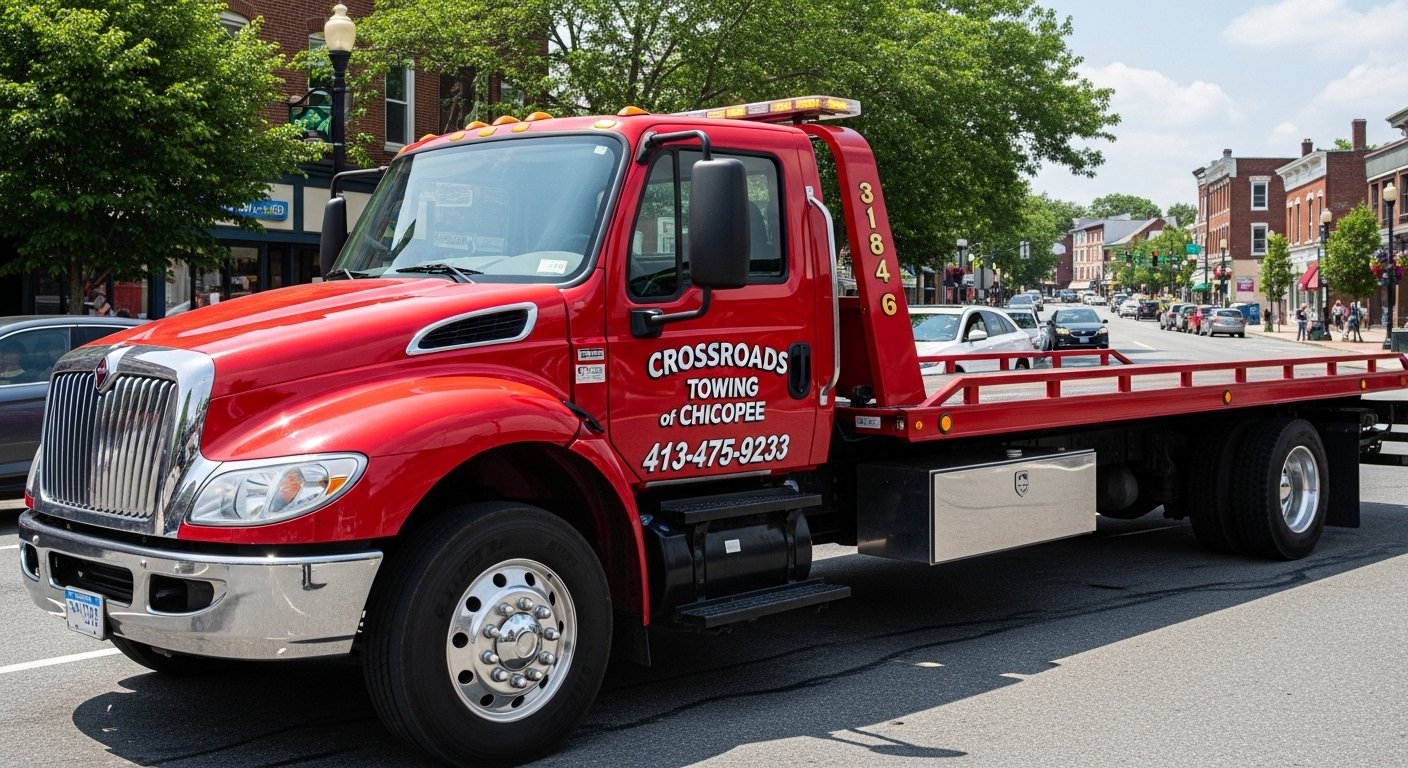
Flatbed towing places the whole vehicle on a platform so all four wheels stay off the road during transport. That reduces wear during the tow and gives the operator more control over how the vehicle is loaded and secured. For low-clearance vehicles, luxury cars, classics, and many EVs or AWD vehicles, this method is often the preferred choice because it helps protect the drivetrain, underbody, wheels, and bodywork.
Flatbed towing is also useful after collisions or when a vehicle has severe tire, wheel, or suspension damage. If the car no longer rolls properly, keeping it fully supported can make the move safer and more predictable. That is a common scenario after crashes and during winter incidents where the vehicle may have hit a curb, slid into a bank, or suffered hidden underbody damage.
Where wheel-lift towing fits
Wheel-lift towing is often efficient for standard local towing when the vehicle type and condition make it appropriate. It can be a practical option for many routine moves around town, especially when access is tight or the job is otherwise straightforward. The important part is not choosing a method because it is faster in the abstract. It is choosing the method that fits the specific vehicle and the real roadside conditions.
How to think about the choice
Instead of asking which method is universally better, ask which method makes sense for your car. If you drive an all-wheel-drive vehicle, a low-clearance car, a collectible vehicle, or an EV, the answer often leans toward flatbed transport. If you drive a standard vehicle with no special handling concerns and the tow is routine, other methods may be practical. The operator still has to account for vehicle condition, wheel damage, access, and safety at the pickup point.
Why this matters for local drivers
In the Chicopee area, many towing calls happen in poor weather, on uneven surfaces, or in places where loading angles matter. Snowbanks, ice, sloped driveways, curb contact, and traffic pressure can all change what is safest. That is why a towing page should not treat every job the same. The transport method needs to match both the vehicle and the environment.
The takeaway is simple: flatbed and wheel-lift towing are tools, not interchangeable labels. The best method is the one that moves the vehicle safely, protects it during transport, and fits the real conditions of the job.
Related service pages
Frequently asked questions
Is flatbed towing always better?
Not always, but it is often the safer choice for AWD, EV, luxury, classic, and low-clearance vehicles.
When is wheel-lift towing practical?
Wheel-lift towing can be efficient for many standard local tows when the vehicle and situation allow it.
Why does vehicle type matter so much?
Different drivetrains, wheel setups, and clearances change what transport method is safest.